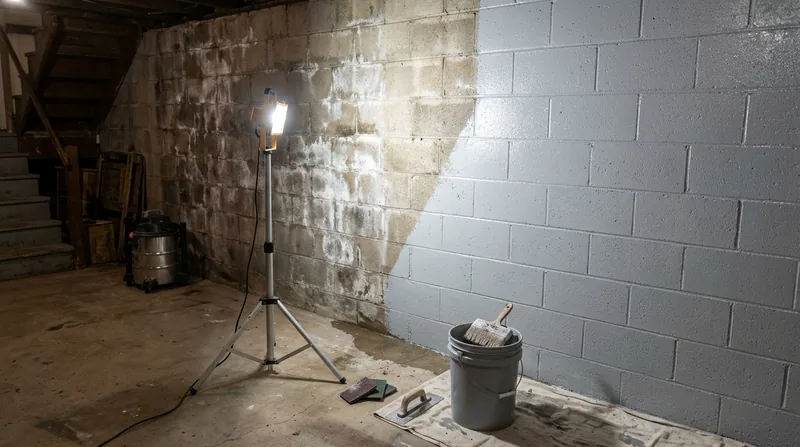




Basement Wall Sealing in Lincoln
Lincoln sits in the Salt Valley on silty loess and heavy glacial clay, and that clay swells and shrinks with every freeze-thaw cycle. In the Near South and Havelock foursquares, water pushes through brick and stone walls at the mortar joints. In the 1990s and newer Colonials out toward Fallbrook and Waverly, it works through poured-concrete pores and hairline cracks. Basement Wall Sealing in Lincoln starts with diagnosing which of those two problems you actually have, because a sealer solves dampness and does not solve hydrostatic pressure. We prep the wall, strip efflorescence, and apply the right penetrating or membrane product for your wall type and moisture reading. If the real issue is water under pressure, we tell you straight and point you to interior drain tile instead of selling you a coating that will peel by spring.
Why Basement Wall Sealing Matters in Lincoln's Clay and Loess Soil
Most Lincoln basements are full basements, and most of them sit in ground that holds water. The glacial clay along Salt Creek, Antelope Creek, and Haines Branch swells against the wall in spring and pulls away in late summer, opening the same cracks year after year. Fast prairie thunderstorms dump an inch in an hour, and the soil cannot shed it fast enough. That is when homeowners in Irvingdale and Belmont find the damp line creeping up the wall.
- Brick and stone walls in 1900s to 1930s homes wick moisture at the mortar joints and leave white efflorescence on the face.
- Poured walls in 1990s and newer builds seep through tie holes, cold joints, and shrinkage cracks that a sealer can close.
- High water table conditions near the floodplain push water in from the footing, which no surface coating will stop.
- Downspouts that dump at the foundation and flat or negative grading load the wall from the outside.
We read the wall before we touch it, because the failure mode tells us whether sealing is the answer or just a band-aid.
Key info: A 1920s foursquare in University Place with efflorescence and a damp wall but no standing water is a sealing job. The same wall with water running at the cove joint after a storm is a hydrostatic problem, and we will say so on the spot.
For the regulatory side, drainage and structural work permits vary by jurisdiction, so verify requirements with the City of Lincoln building department before any work that alters drainage or the foundation.
How We Seal Basement Walls in Lincoln Homes
Every job starts with a free basement inspection, and we walk the wall with a moisture meter, not a sales pitch. We map the damp readings, check the cove joint and the crack pattern, and look at grading and downspout discharge outside. Then we tell you which treatment fits and what it will not fix. If the wall is bowing or the crack is structural, sealing is not the repair, and we will route you to the right crew.
- We inspect the full wall and foundation, record moisture readings, and identify the water source.
- We remove efflorescence, loose parging, and failed coatings so the sealer bonds to sound masonry.
- We fill active cracks and tie holes with hydraulic cement or epoxy injection before any coating goes on.
- We apply a penetrating sealer on brick and stone, or a flexible waterproof membrane on poured walls.
- We correct grading and downspout extensions at the same visit so the wall is not reloaded from outside.
- We leave you a written summary of what was sealed and what to watch over the next wet season.
The prep work is what separates a sealer that lasts from one that blisters off after the first hard freeze.
Key info: A split-level in Eastridge had a damp wall and a musty smell every spring. Moisture readings showed surface condensation and wicking, not pressure. We stripped efflorescence, sealed the poured wall, and extended two downspouts. No drain tile was needed, and we told the owner that before quoting anything.
For homes where the reading tells a different story, we detail the full approach on our basement waterproofing page.
Sealing Methods We Use and When Each One Fits
| Approach | Description | Best for |
|---|---|---|
| Penetrating sealer | Sinks into masonry pores and reacts to block capillary wicking without a surface film. | Brick and stone walls in older Lincoln homes with dampness and efflorescence. |
| Waterproof membrane | Flexible coating that bridges hairline cracks and moves with the wall through freeze-thaw. | Poured-concrete walls in Fallbrook, Waverly, and Hickman with seepage at tie holes. |
| Crack injection | Epoxy or polyurethane injection through ports to fill and seal an active crack full depth. | Isolated vertical or diagonal cracks that leak after rain. |
| Parging repair | Replacing deteriorated mortar coat on block or stone before sealing the face. | Crumbling parging on 1950s ranches in Belmont and Woods Park. |
| Interior drain tile | Perimeter drain and sump system that relieves water pressure instead of coating the wall. | Walls with water at the cove joint and high water table conditions. |
If the table points you toward drainage rather than sealing, that is the honest answer, and we will quote it that way.
Basement Wall Sealing Cost in Lincoln: What to Expect
Most surface sealing work in Lincoln starts around $1,500, and that figure covers a typical single-wall or small-basement job with prep, efflorescence removal, crack filling, and one sealer application. Larger basements, heavy parging repair, or multiple active cracks push the number up. Access matters too: a finished basement with paneling and stored belongings takes longer to protect and work around than a bare wall.
We price by linear feet of wall and by the condition we find, not by a flat rate over the phone. A wall that needs crack injection before sealing costs more than a wall that only needs a coat. That is why we inspect first and quote second. Getting two or three estimates is smart, and any contractor who quotes a number without seeing the wall is guessing.
Our full breakdown of rates and what moves them is on the pricing page.
Hiring a Basement Wall Sealing Contractor Near Lincoln
Ask three things before you sign anything: are you licensed and insured, can you show me recent work in Lincoln, and will you put in writing what this sealer will not fix. A contractor who claims a coating stops hydrostatic pressure is selling you a callback. Ask for the certificate of insurance, not just a verbal yes.
- Confirm the company is licensed and insured, and ask for the certificate before work starts.
- Get two or three written estimates that list prep steps, products, and exclusions.
- Ask for references from Lincoln neighborhoods with the same wall type as yours.
- Verify permit requirements with the City of Lincoln building department when drainage or structural work is involved.
- Check any HOA rules on exterior discharge and downspout routing before the crew arrives.
You can reach us at (531) 229-0952 or through the contact page to schedule the free inspection.
A sealer is only as good as the diagnosis behind it, and that is the part we refuse to skip.
Basement Wall Sealing in Lincoln: Pricing Guide
| Service | Price | Details |
|---|---|---|
| Single wall sealing | Starting at $1,500 | Includes efflorescence removal, crack filling, and one sealer coat on a typical wall. |
| Full basement sealing | Starting at $2,800 | Covers all perimeter walls with prep and coating; finished basements add protection time. |
| Crack injection before sealing | Starting at $450 per crack | Epoxy or polyurethane injection for active cracks, priced by depth and access. |
| Parging repair and reseal | On estimate | Crumbling mortar coat needs an on-site look before we quote the repair scope. |
| Travel | Included | In Lincoln and surrounding areas, no separate call-out or mileage fee. |
| Estimate | Free | Response within 24h at (531) 229-0952, no obligation to book. |
Indicative pricing, the exact cost depends on square footage, finish, and site access. Free personalized estimate within 24h at (531) 229-0952.


