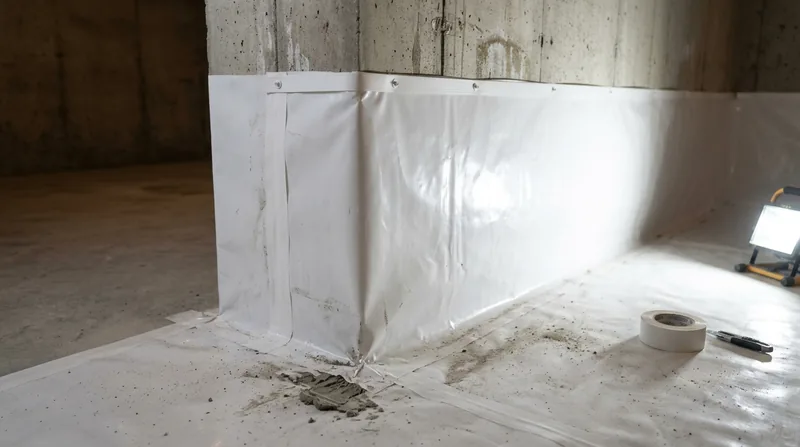




Lincoln sits in the Salt Valley on silty loess and heavy glacial clay, and that clay swells and shrinks with every freeze-thaw cycle. In the Near South, Havelock and University Place, full basements under 1900s brick foursquares sweat through old stone and brick walls all summer. Out in Fallbrook, Waverly and Hickman, poured-concrete basements built in the last thirty years still pull ground vapor through hairline cracks and cold joints. Vapor Barrier Installation in Lincoln is the below-grade fix that stops that moisture at the wall and slab before it turns into a musty smell, peeling paint and efflorescence. We install heavy-duty barrier sheets with sealed seams and taped terminations, integrated with your sump where the floor drains, so the lower level stays dry through spring snowmelt and fast prairie thunderstorms. If you are still weighing the full scope of below-grade work, start with our basement waterproofing overview.
Why Vapor Barrier Installation Matters in Lincoln's Clay and Loess Soil
Ground moisture in Lincoln does not announce itself with a puddle. It moves as vapor through brick, stone and early poured walls, driven by hydrostatic pressure from a water table that runs high along Salt Creek, Antelope Creek and Haines Branch. The clay holds that water, releases it slowly, and the vapor condenses on cool basement surfaces. That is why so many basements in Belmont, Irvingdale and Eastridge smell musty even when the floor looks dry.
- Efflorescence on the wall face is the white salt bloom that tells you moisture is moving through the masonry, not just sitting on it.
- Peeling floor paint and lifting tile usually trace back to slab vapor, not to a plumbing leak.
- Musty basement smell in a finished lower level points to vapor condensing behind paneling and insulation.
- Rust on furnace feet, water heater bases and storage racks shows chronic low-level humidity, not a one-time flood.
A vapor barrier addresses that vapor path directly, and it works best when paired with a drainage fix if water is also entering under pressure.
Key info: In a 1920s foursquare off South Street, the basement wall showed efflorescence from floor to sill but no running water. The fix was a sealed wall barrier plus taped slab sheet, not excavation. A home in Hickman with water after every heavy rain needed an interior perimeter drain first, then the barrier.
For the official word on what work needs a permit, check the City of Lincoln building and safety pages before you schedule anything; thresholds vary by jurisdiction and must be verified locally.
How We Install a Vapor Barrier in a Lincoln Basement
Every install starts with a free basement inspection, because a barrier over an active leak traps moisture instead of stopping it. We check the walls for efflorescence and crack movement, check the slab for vapor drive, and confirm the sump basin and discharge line are working. If we find hydrostatic pressure pushing water in, we say so plainly and recommend drainage before the barrier goes up.
- We clear the perimeter, map the wall and slab surfaces, and note every crack, cold joint and penetration.
- We seal active cracks with epoxy or polyurethane injection where the crack is structural, or parge and membrane where it is surface seepage.
- We hang heavy-duty barrier sheet across the walls, overlapping seams and taping terminations at the sill plate and floor joint.
- We lay slab sheet with sealed laps, run it into the sump basin lip, and tape the wall-to-floor transition.
- We test the sump and check valve, then walk the job with you and explain what to watch for.
The sequence matters more than the material. A barrier installed over a wet wall or a dead sump pump will fail, and we will not sell you one.
Key info: A split-level in Woods Park had a finished rec room with a persistent musty smell and no visible water. The sump pump had failed silently months earlier. We replaced the pump, added a battery backup, then installed the barrier. The order saved the homeowner from tearing out new drywall twice.
If your inspection turns up a failed perimeter drain, we route you to our drain tile repair and replacement page before any barrier work is quoted.
Vapor Barrier Approaches We Use in Lincoln Homes
Not every basement gets the same sheet. Brick and stone walls in the older neighborhoods need a different detail than poured concrete in Fallbrook or a walkout in Bennet. The table below shows the main approaches and where each one fits.
| Approach | Description | Best for |
|---|---|---|
| Wall sheet with sealed seams | Heavy-duty barrier hung across the wall face, seams overlapped and taped, terminated at sill and floor joint. | Brick, stone and poured walls with vapor drive but no running water. |
| Slab sheet with sump integration | Barrier laid over the slab, lapped and taped, run into the sump basin lip and sealed at the wall-floor transition. | Basements with slab vapor, damp floors and an active sump. |
| Dimple board drainage mat | Drainage mat against the wall behind the barrier, channeling any wall water down to the perimeter drain. | Walls with intermittent seepage after heavy rain. |
| Barrier plus interior drain tile | Perimeter drain and sump installed first, then the barrier over dry walls and slab. | Hydrostatic pressure and water entering at the wall-floor joint. |
| Parge and membrane repair | Failed parging removed, wall repaired, waterproof membrane applied before the barrier goes up. | Crumbling parging and salt-damaged masonry in older homes. |
We pick the approach after the inspection, not before, and we tell you when a simpler fix is enough.
Vapor Barrier Installation Cost in Lincoln: What to Expect
Most Lincoln barrier jobs start from $3 per square foot of treated wall and slab area, and the final number depends on how much prep the basement needs. A dry poured wall in a 1990s ranch in Eastridge prices very differently from a 1920s brick wall in Havelock with failing parging and three injection ports to set first. Access matters too: a finished basement with paneling to pull and reset costs more than an open one.
The factors that move the price are wall condition, crack count, whether a sump is already in place and working, slab area, and whether drainage has to go in first. We do not quote a barrier over an active leak, because that is a drainage job. Getting two or three estimates is smart, and so is asking each contractor what prep is included. Our full pricing overview breaks down the line items so you can compare quotes apples to apples.
Choosing a Vapor Barrier Contractor Near Me in Lincoln
Ask three questions before anyone touches your basement: are you licensed and insured, what does the estimate include for prep, and will you put the scope in writing. A contractor who quotes a barrier without inspecting the sump and the wall moisture is guessing. Ask for references from jobs in your part of town, and check whether the work needs a permit through the local building department.
If you are comparing bids, call us for a free basement inspection and we will tell you honestly whether you need a barrier, a drain, or just crack sealing. Reach out through our contact page to schedule.
Vapor Barrier Installation in Lincoln: Pricing Guide
| Service | Price | Details |
|---|---|---|
| Wall vapor barrier only | Starting at $3/sq ft | Heavy-duty sheet hung, seams sealed and taped at sill and floor joint. |
| Wall and slab barrier with sump integration | Starting at $4.50/sq ft | Includes slab sheet, sealed laps, sump basin lip seal and transition tape. |
| Barrier plus crack injection prep | Starting at $5.50/sq ft | Epoxy or polyurethane injection on active cracks before the barrier is hung. |
| Barrier plus interior drain tile | On estimate | Drainage installed first when hydrostatic pressure is driving water at the wall-floor joint. |
| Travel | Included | In Lincoln and surrounding areas, no separate call-out or mileage fee. |
| Estimate | Free | Response within 24h at (531) 229-0952, no obligation to book. |
Indicative pricing, the exact cost depends on square footage, finish, and site access. Free personalized estimate within 24h at (531) 229-0952.


